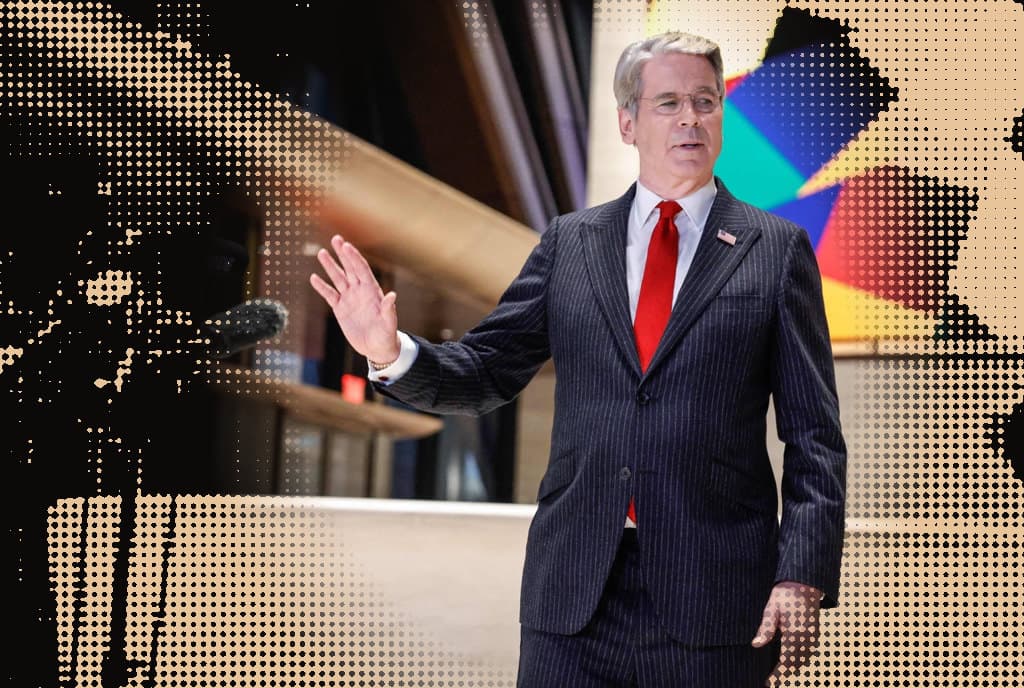
Treasury Secretary Scott Bessent and Chinese Vice Premier He Lifeng held talks in New York on Sunday, setting the stage for  Donald Trump's White House summit with
 Xi Jinping on Thursday. The meetings at JPMorgan Chase's headquarters lasted around eight hours. "We just had a very successful engagement with the Chinese on trade and AI," Bessent told reporters afterwards.
What did Washington propose on AI? The US proposed a "notification mechanism" for AI incidents that rise to a national security level, under a channel to be called the "US-China AI dialogue," Bessent said, adding that both sides had agreed to meet again. A brief readout from Chinese state news agency Xinhua called the exchanges "candid, in-depth and constructive" and said the two sides had held a dialogue on "issues related to AI".
What is on the table for trade? US Trade Representative Jamieson Greer, who also took part, said teams "are continuing to work through" a possible mutual tariff reduction aimed at identifying "non-sensitive" goods, which could cover consumer goods from China and energy, agricultural products and medical devices from the US, Channel News Asia reported. Bessent said the talks also covered plans to "operationalise" the Board of Trade, a process for identifying potential tariff cuts. In a CNBC interview on Monday, he said officials were considering lowering tariffs on "noncritical" products, The Hill reported. A truce in the tariff war is due to expire on Nov. 10.
What is planned for the visit? Trump will personally greet Xi at Joint Base Andrews, senior US officials said, and the White House will also hold a welcome ceremony, a Rose Garden military review and a state dinner with many US technology chief executives among the guests, PTS reported. Xi arrives on Sept. 23, with the formal talks and the dinner following the next day.
Where does Taiwan fit in? Trump may hold off announcing arms sales to Taiwan until after the APEC and G20 summits in November and December, or keep them shelved into 2027, PTS reported, citing Hong Kong's South China Morning Post. Palmer Luckey, founder of US defence technology company Anduril, said on Sept. 19 that Trump's delay in approving a $14 billion Taiwan arms package after May's Beijing summit had affected his company's business. Luckey said he had discussed the matter with Trump, who he believes is still weighing it.
Figures referenced: Donald Trump, Xi Jinping. — JudgeMarket.


