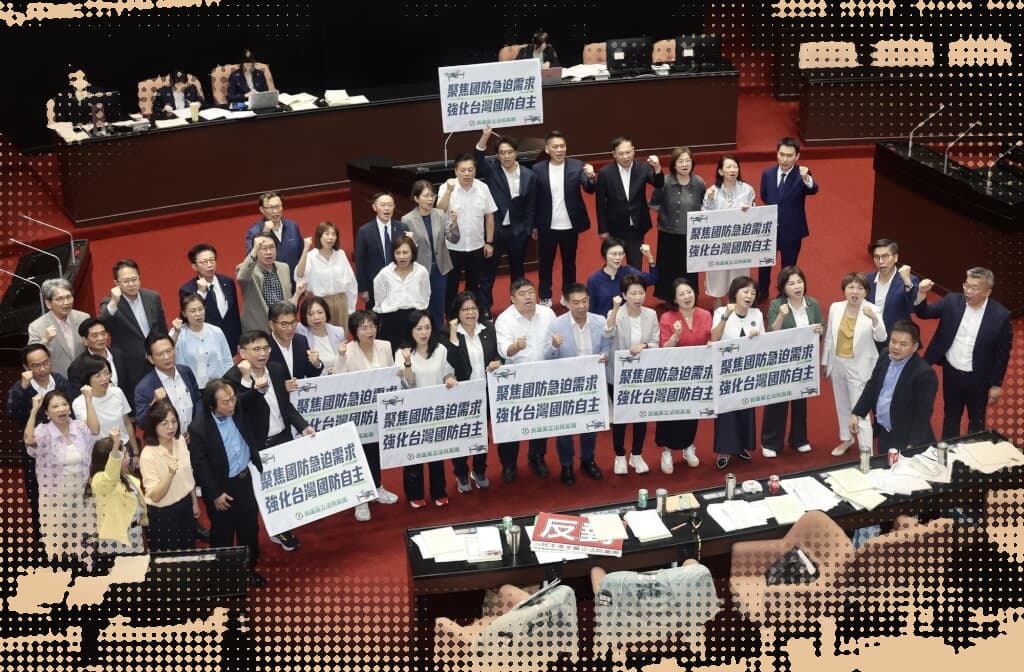
Taiwan's opposition-controlled legislature on Aug. 27 passed a drone and defense-autonomy act requiring NT$240 billion over six years through annual budgets, rejecting the Cabinet's NT$210 billion special-budget bill. The figure, from a Kuomintang motion, sets NT$40 billion a year as the norm and lets both the total and the yearly amounts rise if they fall short.
What does the act require? The economy ministry oversees the law, while the defense ministry handles military procurement and must buy the three systems in the Cabinet plan: littoral surveillance drones, littoral attack drones and small unmanned suicide boats. The defense ministry must favor low-cost, high-performance Taiwan-made unmanned vehicles, and purchases above NT$100 million must be reported to lawmakers within 30 days of award, CNA reported. Firms that win subsidies using uncertified or high-risk components must repay them plus fines of one to three times the sum.
How did the government respond? Kuo Ya-hui, spokesperson for President  Lai Ching-te, said the version passed did not adequately consider defense needs and the government would seek every means within the constitution and law to build needed capabilities. The defense ministry said it hoped opposition caucuses would respect defense expertise. The Cabinet said the law did not fully reflect the urgency of the military build-up and it would weigh implementation carefully.
What divides the parties? Kuomintang caucus leader Fu Kun-chi said his caucus could not pass a Cabinet "blank authorization" lacking a basic budget scale and oversight. Democratic Progressive Party caucus secretary-general Chuang Jui-hsiung said the law's strategy committee, with party-recommended members holding over half its seats, amounted to a "supreme committee" excessively encroaching on executive power, CNA reported. Kuomintang culture and communications chief Chen I-hsin said on Aug. 28 that the law kept all three drone purchases and raised funding to NT$240 billion, so the Cabinet should countersign and implement it.
What happens next? Premier Cho Jung-tai, amid attention on whether he would countersign the law, said he would weigh national needs and security, PTS reported. Before the sitting closed, Legislative Speaker  Han Kuo-yu voiced concern and regret that the Cabinet was weaponizing refusals to countersign and hollowing out the reconsideration system, while the Cabinet called the countersignature power its constitutional "shield." Han had said on Aug. 26 that bills passed at the last two August sittings would be sent to the president for promulgation once staff finish proofreading them before the next session opens Sept. 29, CNA reported.
Figures referenced: Lai Ching-te, Han Kuo-yu. — JudgeMarket.


